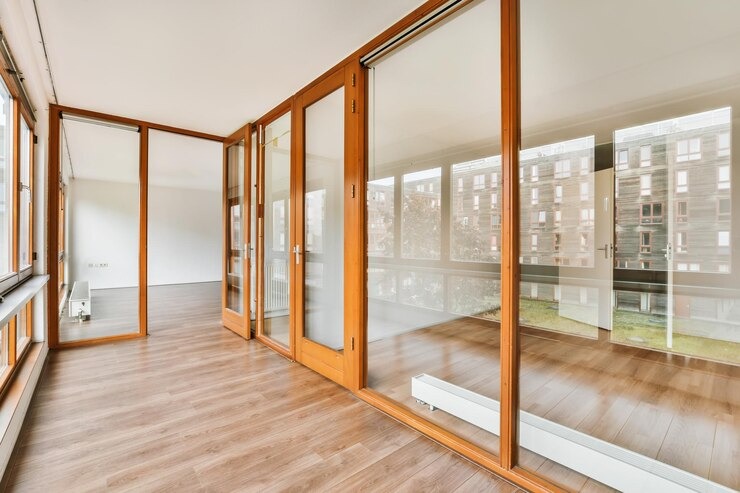
There’s a reason timber sliding doors stay popular — they bring a warmth and character that aluminium and glass just can’t match. But timber is a natural material, and that comes with its own quirks. Unlike metal, wood moves. It swells, shrinks, and reacts to moisture and heat, which means timber sliding doors need a bit more understanding to keep them running well.
If your timber door has started sticking, dragging, or refusing to close flush, here’s what’s most likely going on.
The door swells and sticks in humid weather
This is the classic timber problem. When the air gets damp — think Sydney summers or a run of rainy days — wood absorbs moisture and expands. A door that slid perfectly in winter suddenly binds and sticks in the frame come summer. It’s not damage exactly; it’s the timber behaving like timber. The fix depends on how bad it is. Minor swelling often settles once the weather dries out. Persistent sticking may mean the door needs light sanding at the contact points, and then sealing so moisture can’t keep getting in.
Moisture damage and warping
The flip side of timber’s charm is that it doesn’t love water. If a timber sliding door is exposed to rain, condensation, or damp without a proper protective finish, it can warp, swell permanently, or even start to rot at the base. A warped door won’t sit square and won’t slide cleanly. Catching this early is key — a door that’s just started to swell can often be dried, sanded, and resealed, whereas one that’s badly warped or rotting may need sections replaced or the whole door swapped out.
It drags or feels heavy on the track
Timber doors are heavier than their aluminium cousins, which puts more load on the rollers and track. Over time those rollers wear, and a heavy timber door will drop and drag noticeably once they do.
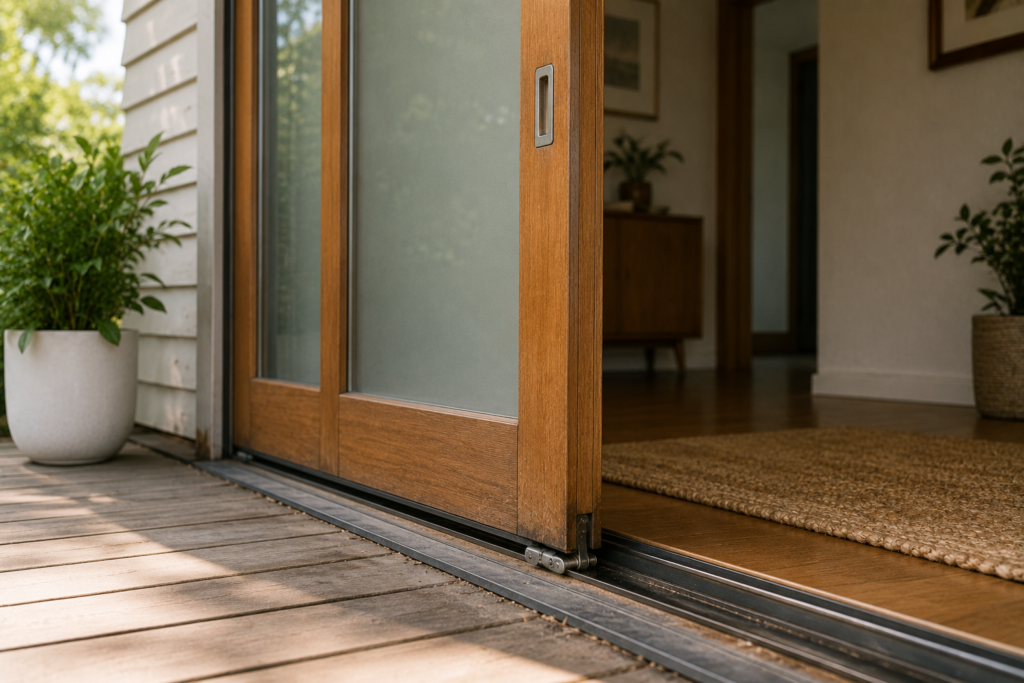
The cause here is the same as with any sliding door — worn rollers or a damaged track — but the extra weight of timber tends to wear the hardware faster. If your door has become a two-hand job to open, it’s very likely the rollers rather than the timber itself. The same logic applies as when a heavier glass door starts dragging on its track.
The finish is fading or peeling
A door’s finish isn’t just about looks — it’s the barrier that stops moisture getting into the wood. Once the paint, stain, or seal starts peeling, the timber underneath is exposed, and that’s when swelling and warping problems start. Re-sealing a timber sliding door every few years is the single best thing you can do to keep it working. It’s cheap maintenance that prevents expensive repairs down the line.
Keeping timber sliding doors happy
The trick with timber is prevention. Keep the finish intact and reseal before it fully wears through. Clean the track regularly so grit doesn’t grind down the rollers. Wipe away condensation and don’t let water pool at the base. And if you live somewhere humid or coastal, expect a little seasonal movement — that’s normal for wood, not a fault.
When timber problems go beyond simple maintenance — a warped door, worn rollers, or a door that no longer seals — it’s worth getting it assessed rather than forcing it. Timber repairs need a slightly different touch than aluminium, but the mechanical side (rollers, tracks, alignment) is the same. If your timber sliding door is struggling and you’re in the area, a proper sliding door repair in Sydney can handle both the timber and the hardware so it goes back to sliding the way it should.
Conclusion
Timber sliding doors reward a little care. Reseal them, keep the track clean, and expect some seasonal swelling in humid weather. Handle the small stuff early — sanding, sealing, cleaning — and you’ll avoid the big stuff like warping and rot. And when the rollers wear or the door won’t sit right, get it looked at properly so a beautiful door doesn’t turn into a daily struggle.